

ResIOT® FluidAI
Research project on fluid analysis with Artificial Intelligence completed
UBLSOFTWARE S.R.L. announces the completion of the industrial research project ResIOT® FluidAI, aimed at developing a software prototype based on Artificial Intelligence and Machine Learning for the automatic analysis of fluids, with a particular focus on water monitoring.
Carried out between September 2024 and June 2026 at the company’s operational site in Rovato (Brescia, Italy), the project was co-funded by the European Union under the Lombardy Region ERDF Regional Programme 2021-2027, «Ricerca & Innova» call.
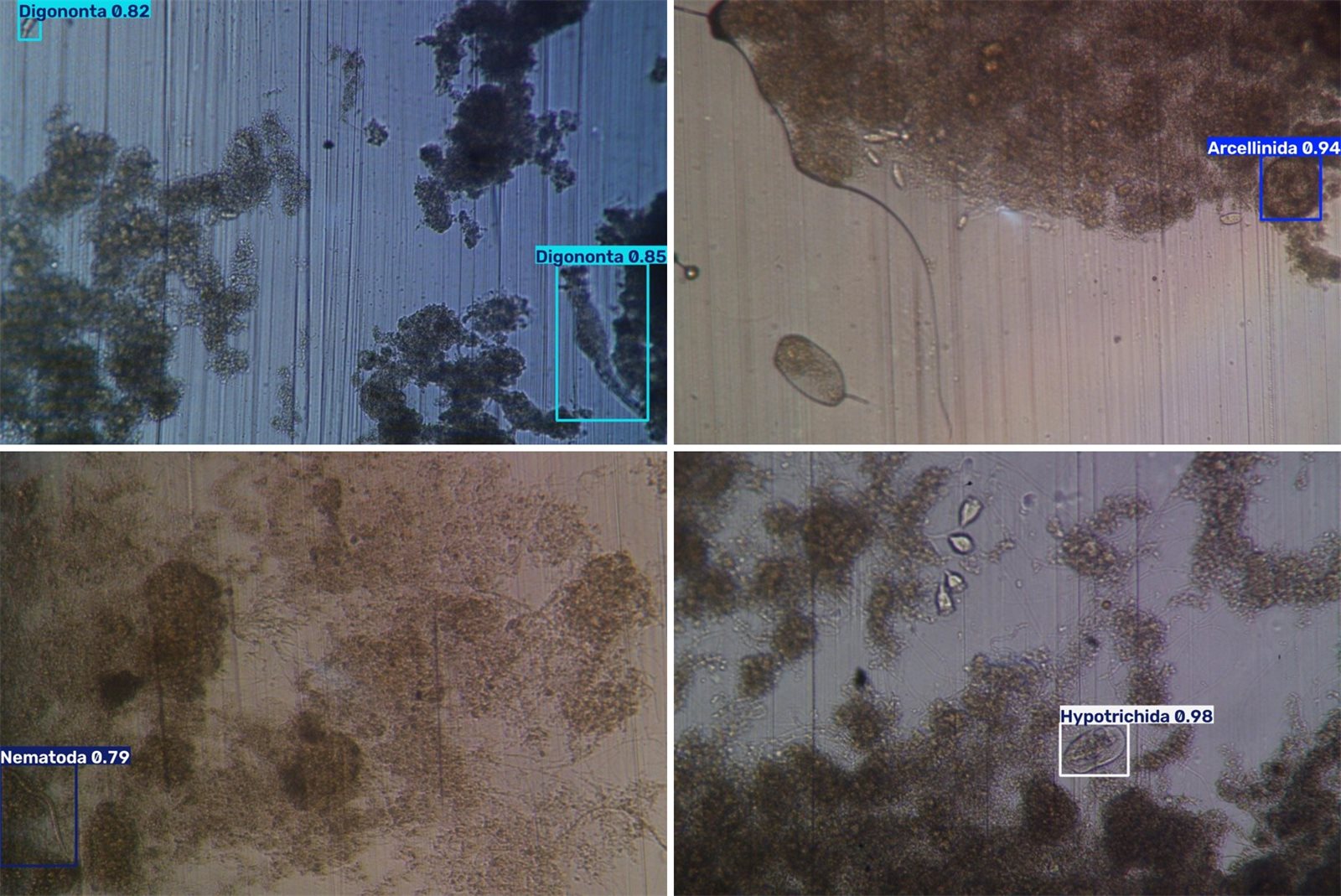
Microorganisms automatically detected by the model, with class and confidence level.
Why an intelligent system for fluid analysis
Microbiological monitoring of fluids, such as the microscope observation of microfauna in the activated sludge of wastewater treatment plants, still relies largely on manual, periodic analyses. This limits how often checks can be performed and how quickly operators can react to anomalies.
ResIOT® FluidAI was created to make this activity automatic, continuous and predictive: the system analyses the acquired images, detects and counts the microorganisms present, records their trend over time and flags critical situations in advance.
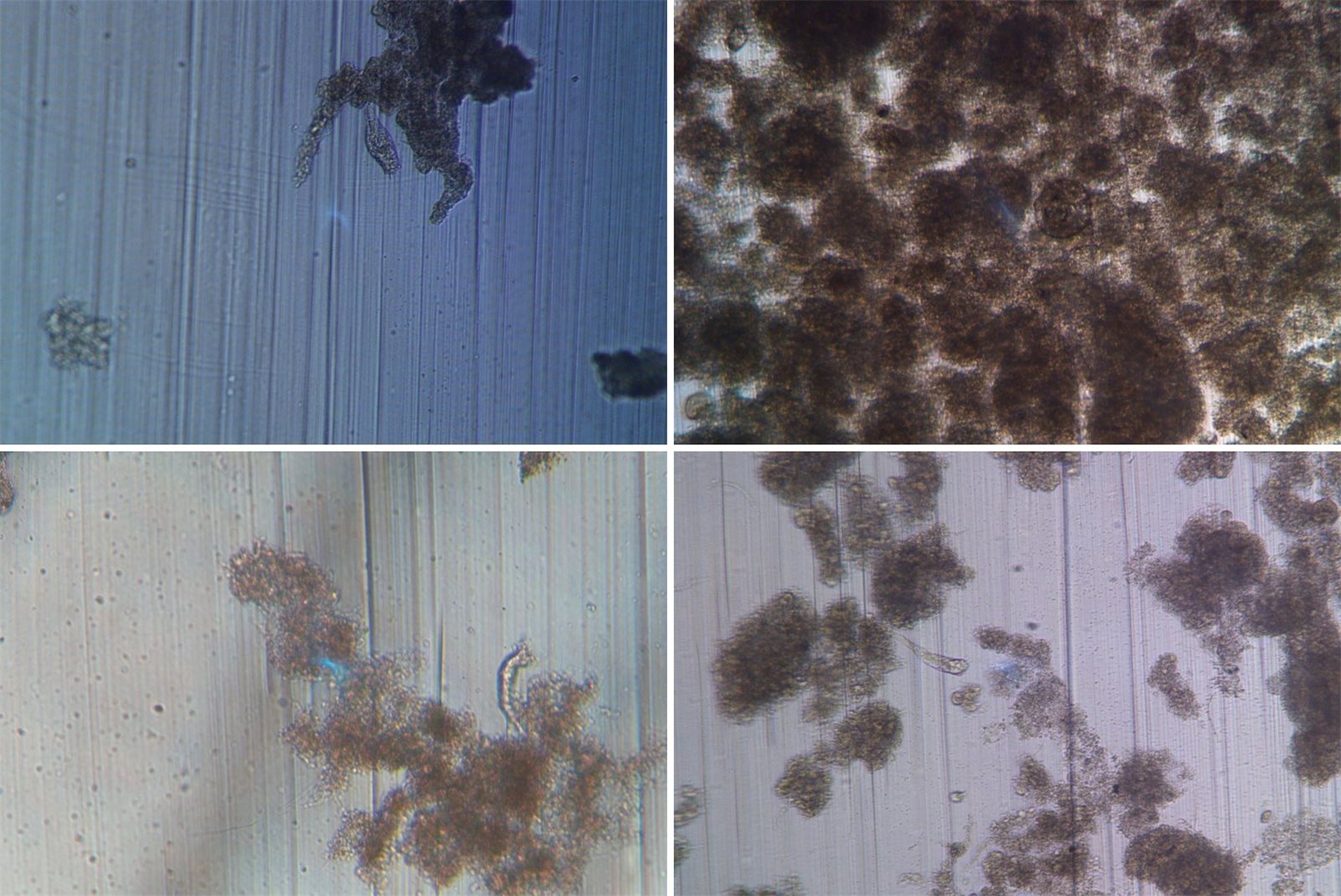
Examples of microscope images used to train the model.
Three research lines
Microorganism recognition
A neural-network computer vision model (YOLOv8 architecture) was trained on microscope images with more than 4,100 annotated instances across five classes: Arcellinida, Digononta, Hypotrichida, Monogononta and Nematoda.
Indices and alerts
Counts are validated through a minimum-accuracy filter, stored in a configurable history and turned into a moving average. When the critical threshold is exceeded, the system raises an alarm and identifies the prevalent species, with real-time visualisation.
Forecasting over time
A predictive module based on an ARIMA model, with configurable parameters, estimates the future trend of the values together with its confidence interval. If the forecast reaches the critical threshold, the software issues an early anomaly warning.
Results achieved
On the validation dataset the recognition model achieved an overall mAP@0.5 of 0.841 and a maximum F1 score of 0.80 at a confidence threshold of 0.462. Confusion between different species is very rare.
The main room for improvement lies in separating the organism from the image background, especially for the classes less represented in the dataset. For this reason, the operating threshold was calibrated on the F1, Precision and Recall curves, and counts are stabilised with a minimum-accuracy filter and a moving average. Expanding and balancing the dataset is among the planned future developments.
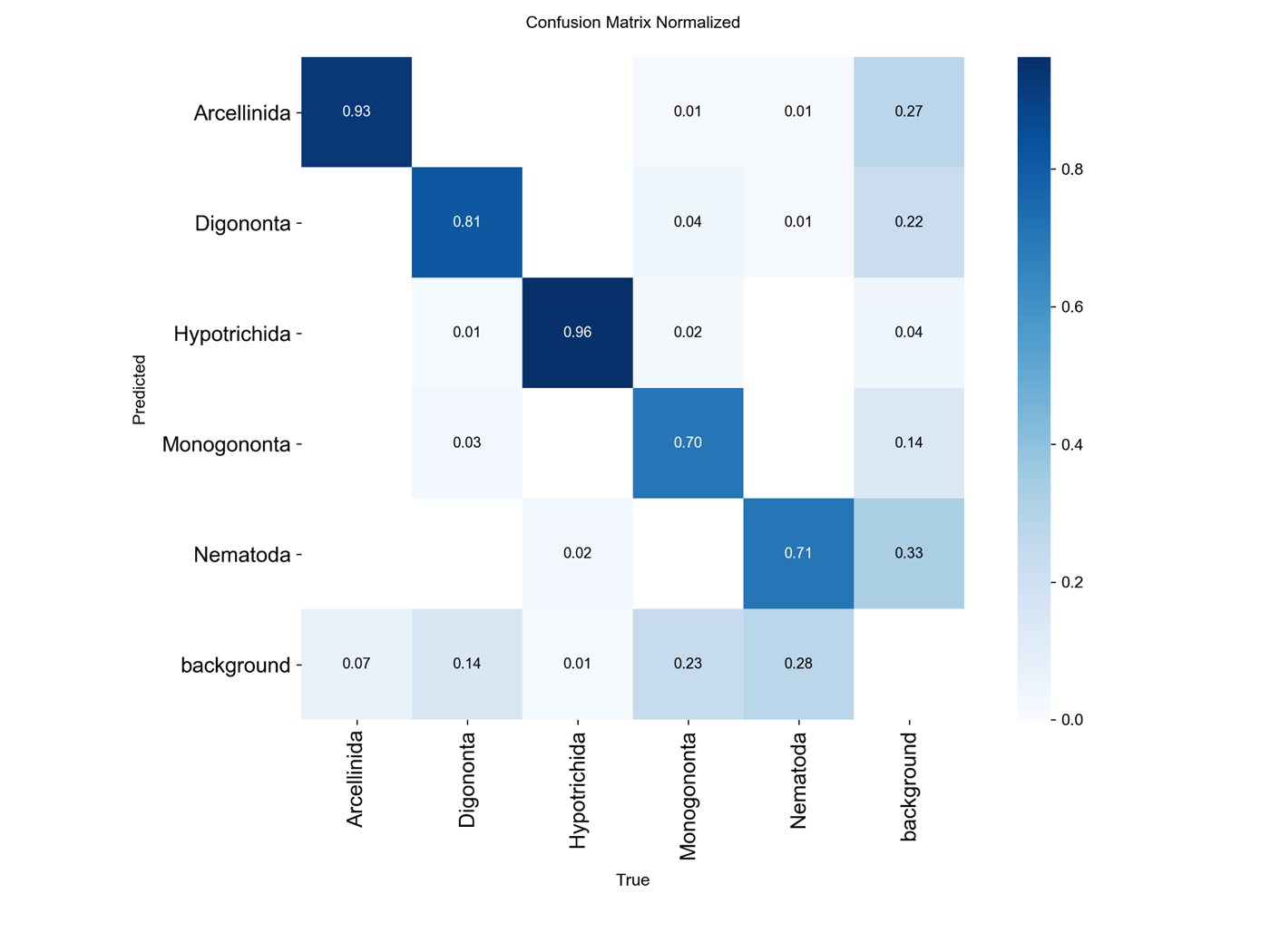
Normalized confusion matrix: correct classification for each class.
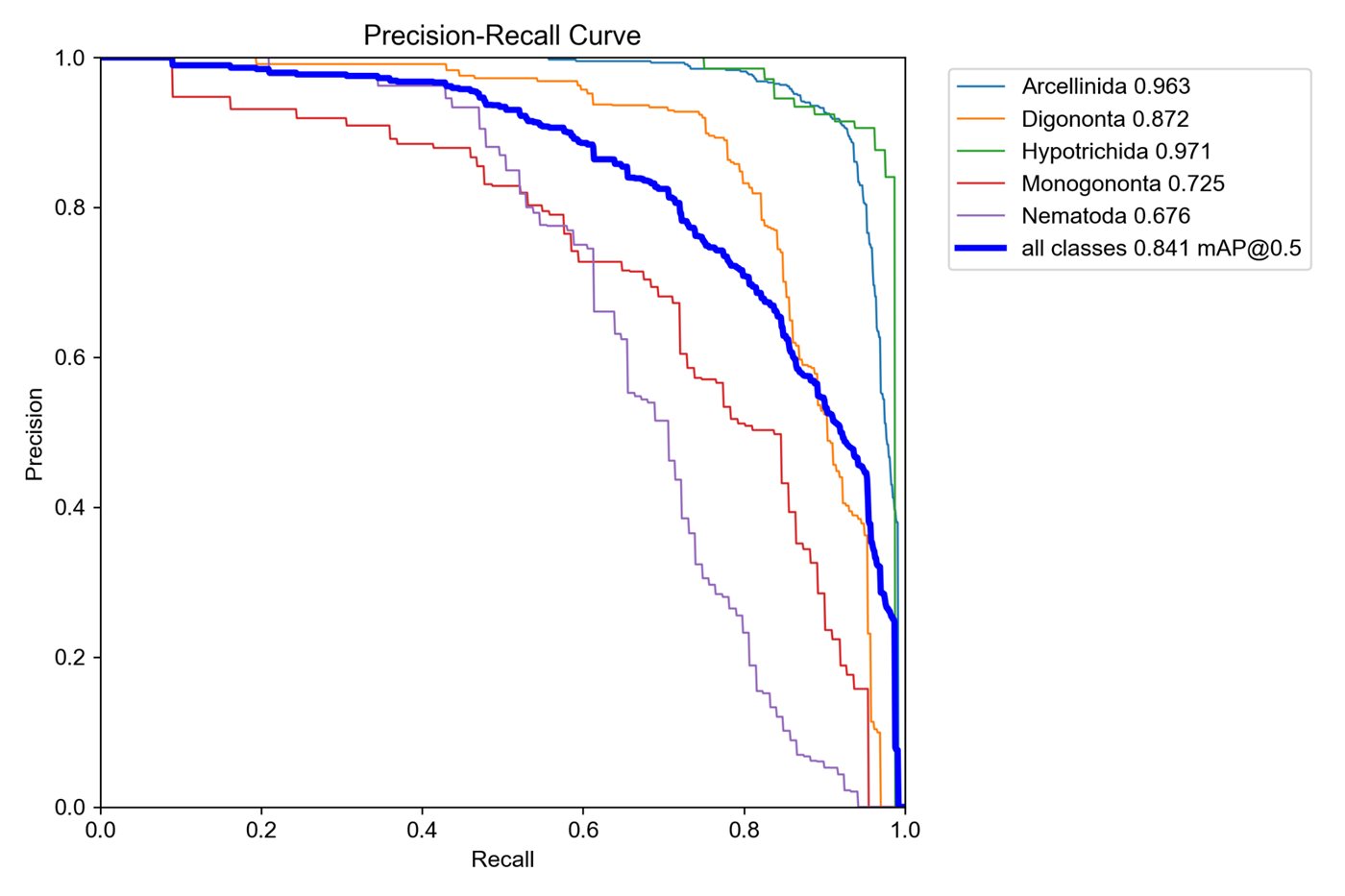
Precision-Recall curve per class and overall (mAP@0.5 = 0.841).
From data to decision
The model’s counts feed a real-time dashboard that compares the moving average of the detected microorganisms with the alarm threshold set by the person in charge of monitoring. The predictive module then projects the trend into the future: the forecast is used as an early warning, with an uncertainty interval that widens as the time horizon grows.
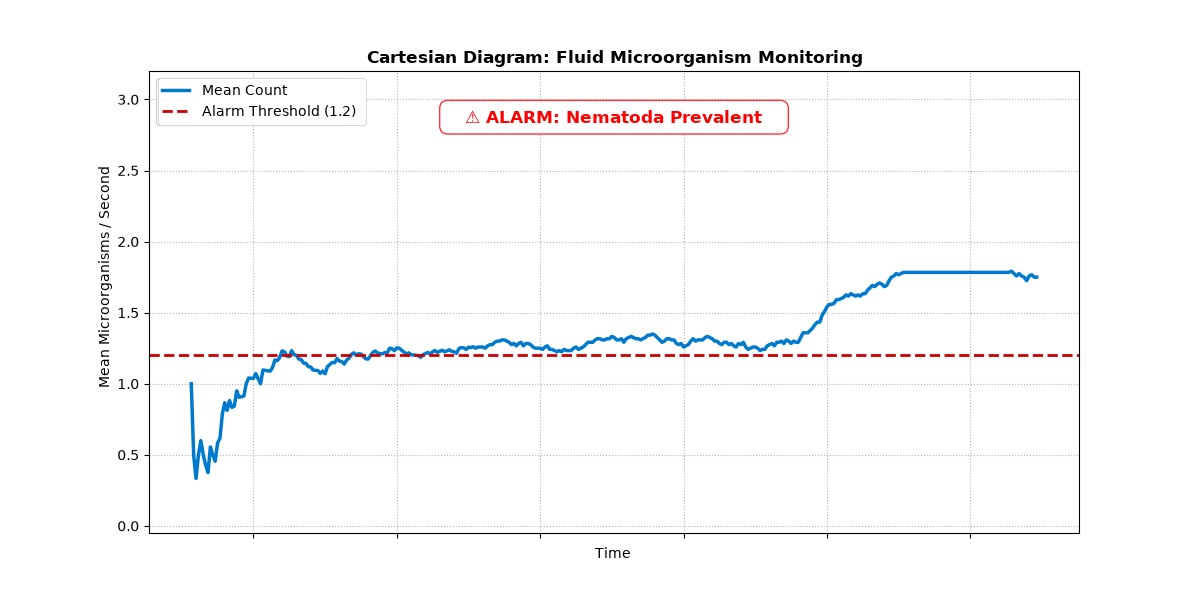
Real-time monitoring: moving average, alarm threshold and prevalent species.
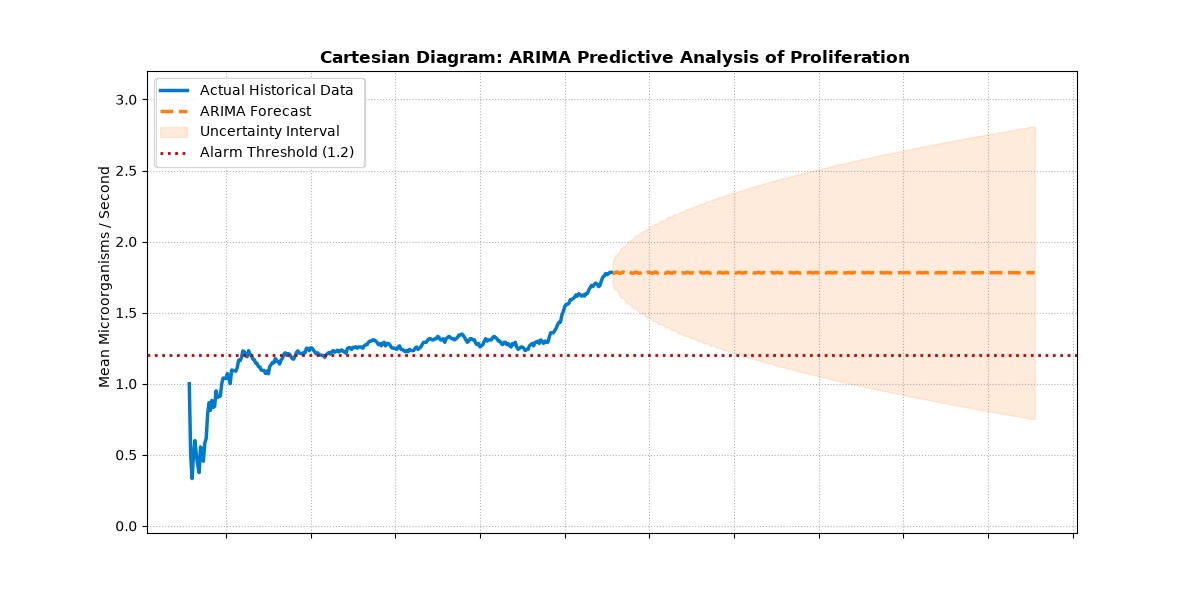
ARIMA predictive analysis: estimated trend and uncertainty interval.
On-edge, right in the field
The software architecture was optimised and tested for on-edge execution on the Coral Dev Board Mini, a single board computer with an Edge TPU coprocessor designed to accelerate machine learning models at low power consumption.
Images are processed locally, without transferring them to external infrastructure: lower latency, less dependence on the network and potentially lower energy consumption. The suite was also tested in simulated Windows and Linux environments under controlled conditions.
Application areas
The prototype, validated in a controlled environment, is aimed in particular at:
Wastewater treatment, with continuous monitoring of activated sludge microfauna in municipal and industrial plants.
Water networks and drinking water, at distribution nodes and drinking water treatment plants.
Food and beverage industry, supporting fluid control on production lines.
Chemical, pharmaceutical and healthcare sectors, for automated microbiological counts and wastewater analysis.
Sustainability and next steps
The project addresses water saving and better management of water resources. More frequent and widespread checks, timely alerts and estimates of future trends help manage treatment processes preventively and limit the discharge of non-compliant water into receiving water bodies.
Next steps include field validation, training the model on additional classes of microorganisms based on customer needs, and integration with the ResIOT® platform.